What Is Aluminium Foil?
Aluminium foil is a thin sheet of metal foil comprising about 92-99% aluminum. Its thickness is typically between 0.0002 to 0.006 inches. Its width and intensity are very different due to expected applications. It is a material that is durable, non-toxic, and oil-proof, which can resist chemical erosion.
Why Choose Us
Our factory
Shandong Yuxuan Paper Plastics Packing Co., Ltd. . specializes in the production and sales of baking paper, barbecue paper and other food packaging paper.
One-stop services
We provide active and competent support both before and after sales, ensuring exceptional service and customer satisfaction at every stage.
High quality
We are committed to providing customers with cost-effective and high-quality food packaging paper solutions, and always adhered to the cooperation concept of high-quality, best quality, best price, and best service.
Advanced equipment
Our factory is built according to the requirements of the Chinese QS workshop, with closed prevention management and a dedicated quality inspection department. With advanced equipment, we can meet the requirements and services of customers from all over the world.
Professional team
Our company has a comprehensive research and development, production, sales, and after-sales system.
-
![10mic Aluminium Foil Paper 8011 Food Grade Barbecue Baking Paper]() 10mic Aluminium Foil Paper 8011 Food Grade Barbecue Bakin...Aluminum foil is a thin sheet made from aluminum metal, commonly used for food packaging, cooking, and storage. It offers excellent heat resistance, corrosion protection, and moisture resistance, effectively safeguarding food from air,read more
10mic Aluminium Foil Paper 8011 Food Grade Barbecue Bakin...Aluminum foil is a thin sheet made from aluminum metal, commonly used for food packaging, cooking, and storage. It offers excellent heat resistance, corrosion protection, and moisture resistance, effectively safeguarding food from air,read more -
![10um 12um 15um 8011 Aluminium Foil Paper Barbecue High Quality Paper]() 10um 12um 15um 8011 Aluminium Foil Paper Barbecue High Qu...Food-Grade Aluminum Foil Paper: This aluminum foil paper is made from 8011 food-grade aluminum, ensuring it is safe and sanitary. It can be used on both sides.read more
10um 12um 15um 8011 Aluminium Foil Paper Barbecue High Qu...Food-Grade Aluminum Foil Paper: This aluminum foil paper is made from 8011 food-grade aluminum, ensuring it is safe and sanitary. It can be used on both sides.read more -
![10um 12um Food Grade Aluminium Paper Barbecue Specific High]() 10um 12um Food Grade Aluminium Paper Barbecue Specific HighFood Grade Aluminium Paper Foil Roll The Food Grade Aluminium Foil Roll made of 8011 aluminium and the aluminum foil is a hot stamping material that is directly pressed into thin sheets using metal aluminum. It has a soft texture, goodread more
10um 12um Food Grade Aluminium Paper Barbecue Specific HighFood Grade Aluminium Paper Foil Roll The Food Grade Aluminium Foil Roll made of 8011 aluminium and the aluminum foil is a hot stamping material that is directly pressed into thin sheets using metal aluminum. It has a soft texture, goodread more -
![8um 9um 10um 8011 Food Grade Aluminium Foil Paper]() 8um 9um 10um 8011 Food Grade Aluminium Foil PaperThe aluminum foil paper is made from food-grade aluminum, ensuring safety and hygiene. It is double-sided and can be cut to any size using the boxed sawtooth cutter. It has strong heat absorption, quick heat conduction, even heating, andread more
8um 9um 10um 8011 Food Grade Aluminium Foil PaperThe aluminum foil paper is made from food-grade aluminum, ensuring safety and hygiene. It is double-sided and can be cut to any size using the boxed sawtooth cutter. It has strong heat absorption, quick heat conduction, even heating, andread more -
![Chocolate Wrappers Aluminium Foil Paper]() Chocolate Wrappers Aluminium Foil PaperAluminum foil has a clean, sanitary, and shiny appearance. Chocolate wrappers made of aluminum foil can be integrated with many other packaging materials. The printing effect on aluminum foil surfaces is better than on other materials.read more
Chocolate Wrappers Aluminium Foil PaperAluminum foil has a clean, sanitary, and shiny appearance. Chocolate wrappers made of aluminum foil can be integrated with many other packaging materials. The printing effect on aluminum foil surfaces is better than on other materials.read more -
![Food Packaging Aluminium Foil Paper]() Food Packaging Aluminium Foil PaperThe newly launched household aluminum foil roll is definitely a heavyweight player in your kitchen. More and more customers are choosing heavy-duty aluminum foil rolls, such as the 12 x 1000ft size, to ensure a sufficient supply for theirread more
Food Packaging Aluminium Foil PaperThe newly launched household aluminum foil roll is definitely a heavyweight player in your kitchen. More and more customers are choosing heavy-duty aluminum foil rolls, such as the 12 x 1000ft size, to ensure a sufficient supply for theirread more -
![Aluminium Foil Paper for Food]() Aluminium Foil Paper for FoodAluminum foil is widely used in food packaging, cooking, storage, and various industrial applications. It boasts excellent heat resistance, allowing it to withstand high temperatures without warping or melting. One of its key features isread more
Aluminium Foil Paper for FoodAluminum foil is widely used in food packaging, cooking, storage, and various industrial applications. It boasts excellent heat resistance, allowing it to withstand high temperatures without warping or melting. One of its key features isread more -
![Aluminium Foil Paper Roll]() Aluminium Foil Paper RollAbout this product:aluminium foil paper roll. The width is usually 30cm, 38cm, 40cm, 45cm. The length is usually 5m, 10m, 20m, 50m. The thickness is usually 9-15mic. you can customized size,packing or othersread more
Aluminium Foil Paper RollAbout this product:aluminium foil paper roll. The width is usually 30cm, 38cm, 40cm, 45cm. The length is usually 5m, 10m, 20m, 50m. The thickness is usually 9-15mic. you can customized size,packing or othersread more -
![Aluminium Foil Paper Packaging]() Aluminium Foil Paper PackagingAluminium Foil Paper very suitable for daily baking needs, easy to clean, no plot troubles. Used for grilling, making foil bags, keeping food moist during cooking, or packaging chocolate, butter, etc. The product has passed certificationsread more
Aluminium Foil Paper PackagingAluminium Foil Paper very suitable for daily baking needs, easy to clean, no plot troubles. Used for grilling, making foil bags, keeping food moist during cooking, or packaging chocolate, butter, etc. The product has passed certificationsread more -
![Heavy Duty Aluminium Foil Paper]() Heavy Duty Aluminium Foil PaperHeavy Duty Aluminum foil is widely used in food packaging, cooking, storage, and various industrial applications. It boasts excellent heat resistance, allowing it to withstand high temperatures without warping or melting. One of its keyread more
Heavy Duty Aluminium Foil PaperHeavy Duty Aluminum foil is widely used in food packaging, cooking, storage, and various industrial applications. It boasts excellent heat resistance, allowing it to withstand high temperatures without warping or melting. One of its keyread more -
![Aluminium Foil Paper Kitchen]() Aluminium Foil Paper KitchenAluminum foil is a non-toxic packaging material that can come into direct contact with food without posing any harm to human health.Available in sizes such as 30cm x 10m, 45cm x 50m, or any custom size you prefer.read more
Aluminium Foil Paper KitchenAluminum foil is a non-toxic packaging material that can come into direct contact with food without posing any harm to human health.Available in sizes such as 30cm x 10m, 45cm x 50m, or any custom size you prefer.read more -
![Aluminium Foil Paper Bowl]() Aluminium Foil Paper BowlAluminum foil paper bowls are an essential choice in our baking life, convenient and effortless. After use, there is no need to clean the air fryer, eliminating the hassle of cleaning and enjoying a wonderful baking experience.read more
Aluminium Foil Paper BowlAluminum foil paper bowls are an essential choice in our baking life, convenient and effortless. After use, there is no need to clean the air fryer, eliminating the hassle of cleaning and enjoying a wonderful baking experience.read more


Highly versatile
Besides the aluminium foil food safety qualities, it is highly versatile. From reheating the food to packing tiffin lunches, it is a perfect solution for all the wrapping requirements.
Microwave safe
One of the best aluminium foil advantage is that it can used in the microwave. It can withstand high temperatures, making it competed safe for use in the microwave.
Super light & flexible
The aluminium foil is super light and flexible, that makes it easier to shape and travel with. So, the food can be easily wrapped and carried, keeping the food fresher for a long time.
Temperature retention property
Another benefit of aluminium foil for food wrapping is that it retains the temperature, as compared to being wrapped in a plastic wrap. It is ideal for transporting food to longer distances or keeping the food warm until it is consumed. It maintains the flavour and texture without making the food soggy.
Easy to use
Jumbo roll foil is very easy to tear, cut and shape to your packaging needs. Even wide rolls of industrial paper can be cut effortlessly with standard cutters or scissors. Because aluminum foil is flexible and malleable, you can shape it around irregularly sized items or create custom containers. Foil foil aluminium rolls offer a cost-effective and simple solution for lightweight packaging.
Provides an effective barrier
One of the main reasons to use aluminum foil as a packaging material is its excellent barrier properties. Foil foil aluminium rolls form a physical barrier that blocks moisture, light, gases and germs. This makes the nest an ideal choice for wrapping food items and keeping them fresher for longer. The shiny surface of the aluminum foil also acts as an effective reflector, helping to reduce the loss of vitamins from exposure to light.
Preserves taste and freshness
Because aluminum foil provides a reliable moisture and odor barrier, it helps preserve the flavor and freshness of packaged items. Loose tea leaves, fresh herbs and cheese will retain their flavor longer when wrapped in foil. Cookies, chips and snacks will stay fresher when stored in foil. The foil's barrier properties also help prevent cross-contamination of flavors and aromas between different foods.
Pre-cut aluminium foil sheets:
Pre-cut aluminium foil sheets combine convenience and efficiency, providing a simple solution for various kitchen activities. These sheets are pre-sized to fit certain needs, such as wrapping sandwiches, lining trays, or covering leftovers. They eliminate the need to rip or cut bigger rolls of foil, saving time and minimising waste. Pre-cut aluminium foil sheets are an ideal choice for busy homeowners, catering enterprises, or anybody looking for practicality without sacrificing quality.
Aluminium foil containers:
Aluminium foil containers take convenience to the next level, providing a diverse solution for cooking, serving, and storing food. These containers come in various forms and sizes, including small individual portions and huge catering trays. They are oven-safe, freezer-safe, and recyclable, making them an environmentally responsible option for food packing. Aluminium containers are widely used for meal preparation, takeaway meals, catering, and food storage. Their lightweight yet sturdy structure makes them suitable for both residential and business use.
Standard aluminium foil:
Standard aluminium foil, readily available in most homes, is the preferred choice for various culinary chores. Its intermediate thickness and elasticity make it perfect for wrapping food, covering dishes, and lining baking trays. Its heat tolerance allows it to be used in the oven, making it a must-have in the kitchens of baking fans. Standard aluminium foil is a versatile solution for everyday use, whether it's sealing in flavours when grilling or keeping leftovers fresh in the refrigerator.
Heavy-duty aluminium foil:
Heavy-duty aluminium foil is useful for jobs that require more strength and longevity. This type of foil is thicker and more durable, making it ideal for wrapping large roasts, covering heavier meals, or forming foil packets for grilling. Its strong structure allows it to endure greater temperatures without breaking, guaranteeing that your food is wrapped securely and cooked evenly. Heavy-duty aluminium foil is popular among professional chefs and caterers due to its dependability in handling large quantities of cooking and serving.
Nonstick aluminium foil:
Are you tired of food sticking to foil and making a mess? Enter non-stick aluminium foil, which is intended to solve this common kitchen problem. This type of foil has a unique coating that keeps food from adhering, making it easy to remove and clean up after cooking or baking. It's handy for delicate things like fish or sticky marinades, which tend to stick to typical foil surfaces. Nonstick aluminium foil ensures that your dishes are correctly cooked and presented with the least effort and mess.
Application of Aluminium Foil
Packaging industry
Food packaging: Aluminium foil is widely used in food packaging to preserve freshness and prevent contamination.
Pharmaceutical packaging: Aluminium foil is used to package medications and vaccines due to its ability to prevent moisture and air from entering the package.
01
Construction industry
Insulation: Aluminium foil is used as a reflective insulation material to reduce heat transfer and energy losses.
Building facades: Aluminium foil is used as a decorative and protective material for building facades.
02
Food processing industry
Cooking and baking: Aluminium foil is used in cooking and baking to preserve food and promote even cooking.
Food storage: Aluminium foil is used to store food and prevent contamination. To buy aluminium foils for food packaging and storage applications, contact a trusted aluminium foil manufacturer in france to be assured of quality and price.
03
Automotive industry
Heat shields: Aluminium foil is used as a heat shield to protect vehicles from heat generated by exhaust systems.
Soundproofing: Aluminium foil is used to reduce noise levels in vehicles by blocking sound waves.
04
Medical industry
Medical packaging: Aluminium foil is used to package medical instruments and equipment to prevent contamination.
Wound care: Aluminium foil is used as a dressing material to promote wound healing.
05
Raw material extraction
From bauxite ore to alumina: Aluminum foil starts with bauxite ore, which is refined into alumina (aluminum oxide) through a process called the bayer process.

Smelting
Transforming alumina into aluminum metal: Alumina is then converted into aluminum metal using the hall-héroult process. This involves melting the alumina in an electrolytic cell and applying an electric current to separate the aluminum from the oxygen.
Casting
Creating aluminum ingots: The molten aluminum is poured into molds to create large blocks called ingots. These ingots are then cooled and solidified.
Rolling
Hot and cold rolling techniques: The aluminum ingots are heated and rolled into thin sheets through hot rolling. These sheets are further rolled at room temperature using cold rolling techniques to achieve the desired thickness.
Final processing
Rolling to foil thickness and cutting: The aluminum sheets are rolled down to the very thin thickness needed for aluminum foil. The foil is then cut into rolls or sheets, ready for use in various applications.
Aluminium foil use tips for efficiency and prevention:
Avoid high-temperature cooking to avoid:
Avoid using too much aluminium foil while grilling or broiling. These methods May accelerate aluminum transport into food. Try these alternatives to parchment paper or silicone baking mats for lining trays and pans.
Use non-reactive containers:
Avoid wrapping acidic or salty foods in aluminium foil while keeping them. To avoid aluminum leaks, use glass or stainless steel containers.
Avoid prolonged zinc contact:
If you wish to cook or store food using aluminium foil, limit direct contact. Putting parchment paper or plastic wrap between the foil and the food in the oven makes this possible.
Avoid cooking on damaged aluminium foil:
Get aluminium foil without rips, holes, or other damage before using it. Avoid foil with damaged surfaces because aluminum May leach into food.
Avoid aluminium foiling acidic foods:
Tomatoes, citrus fruits, and vinegar-based marinades May react with metal foil and promote metal migration. Thus, they should not be wrapped or cooked in metal foil.
Materials of Metric Roller Chain Sprocket
Look for premium quality: When purchasing aluminium foil, it is very important to look for premium quality. Look for foil that is thick, durable and tear-resistant. Inferior films tear easily, causing food to leak and reducing effectiveness. Choose the right foil for a variety of cooking, grilling, freezing, and other uses to meet your specific needs.
Thickness matters: Thickness is an important consideration when purchasing aluminium foil. Gauge determines the strength and flexibility of the film. For example, stronger foils are better for demanding applications like grilling and freezing, while lighter foils are better for wrapping and covering. Assess your needs and choose the right strength to maximize performance and avoid waste.
Find the right width and length: The width and length of your slides are important factors to consider. The standard width provides plenty of coverage when wrapping food or lining bread, while the longer length accommodates larger cooking and baking items and offers versatility. Proper sizing minimizes the need for multiple sheets, reduces waste and improves overall comfort.
Consider surface finish: Another important aspect to consider is the surface finish of the film. The smooth surface of the foil promotes even heat distribution and prevents hot and cold spots during cooking. Plus, the nonstick surface releases food easily, making cleanup easier and reducing the need for additional oils and sprays. Prioritizing a high-quality surface finish ensures optimal cooking and baking results.
Evaluate safety standards: Make sure the aluminium foil you buy meets safety standards. To ensure your aluminium foil is safe for direct food use, look for food contact certifications such as FDA approval. Avoid films of dubious origin or without proper certification, as they May pose health risks when they come into contact with food.
Find greener options: In today's green world, it's important to consider sustainable alternatives. Look for aluminium foil products that are made from recycled materials and are themselves recyclable. Choosing eco-friendly options can help you reduce your environmental impact and build a greener future.
Cost-effectiveness: Price is not the only determining factor, and cost-effectiveness should be considered when purchasing aluminium foil. Evaluate product quality, quantity and shelf life by price. Due to their durability and performance, a premium product can be a bit expensive in the long run. A higher upfront investment May be more cost-effective.
Our Factory
Shandong Yuxuan Paper Plastics Packing Co., Ltd. . specializes in the production and sales of baking paper, household aluminum foil paper, doilies paper, steamer paper, grease proof paper, oil absorb paper, wax paper, barbecue paper and other food packaging paper. We are committed to providing customers with cost-effective and high-quality food packaging paper solutions, and always adhered to the cooperation concept of high-quality, best quality, best price, and best service.
Our factory is built according to the requirements of the Chinese QS workshop, with closed prevention management and a dedicated quality inspection department. With advanced equipment, we can meet the requirements and services of customers from all over the world. Our manufacturing process includes traditional paper conversion processes such as cutting, rewinding, stamping, folding, punching, and packaging. We have the ability to customize specifications and packaging for customers. Our products meet the material requirements of the US FDA and the European LFGB. Our factory has also passed certifications such as QS, BSCI, and FCS.
Our company has a comprehensive research and development, production, sales, and after-sales system. We look forward to working with you to explore the market and create a better tomorrow.


Our Certificate

FAQ
We're professional aluminium foil manufacturers and suppliers in China, specialized in providing high quality customized service. We warmly welcome you to wholesale discount aluminium foil for sale here from our factory.
-
![Parchment Paper Roll 18 Inch Wide]() Parchment Paper Roll 18 Inch WideBaking paper- also known as bakery paper or parchment paper, as it is often called especially in the US- is greaseread more
Parchment Paper Roll 18 Inch WideBaking paper- also known as bakery paper or parchment paper, as it is often called especially in the US- is greaseread more -
![Steamer Paper for Baking]() Steamer Paper for Bakingpremium steamer paper is designed to prevent food from sticking to your bamboo or metal steamers. Made from food-grade,read more
Steamer Paper for Bakingpremium steamer paper is designed to prevent food from sticking to your bamboo or metal steamers. Made from food-grade,read more -
![Disposable Air Fryer Paper Liners]() Disposable Air Fryer Paper LinersBaking Paper ensures that food does not stick on trays, cake forms or dishes, and because no oil is needed to coatread more
Disposable Air Fryer Paper LinersBaking Paper ensures that food does not stick on trays, cake forms or dishes, and because no oil is needed to coatread more -
![Baking Paper With Dispenser]() Baking Paper With DispenserParchment Paper Roll with dispenser,Non-stick, greaseproof, and leakproof parchment paper sheet. The food-graderead more
Baking Paper With DispenserParchment Paper Roll with dispenser,Non-stick, greaseproof, and leakproof parchment paper sheet. The food-graderead more -
![300 Sq.ft Unbleached Parchment Paper]() 300 Sq.ft Unbleached Parchment Paperparchment paper roll is 20% longer than average, designed for family use. The parchment sheets will lay flat on theread more
300 Sq.ft Unbleached Parchment Paperparchment paper roll is 20% longer than average, designed for family use. The parchment sheets will lay flat on theread more -
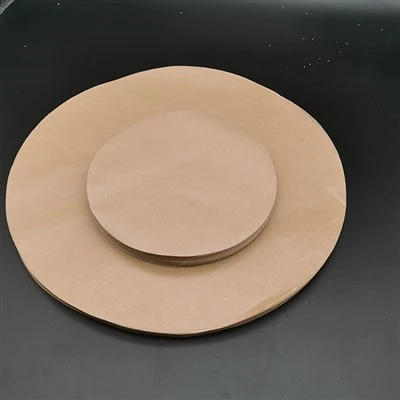
![Precut 6in Unbleached Parchment Paper]() Precut 6in Unbleached Parchment PaperPrecut Heavy Duty Parchment Paper Rounds 6in (15cm),Brown Color Non-Stick liners for Cake Pan, Steaming, Air Fryerread more
Precut 6in Unbleached Parchment PaperPrecut Heavy Duty Parchment Paper Rounds 6in (15cm),Brown Color Non-Stick liners for Cake Pan, Steaming, Air Fryerread more