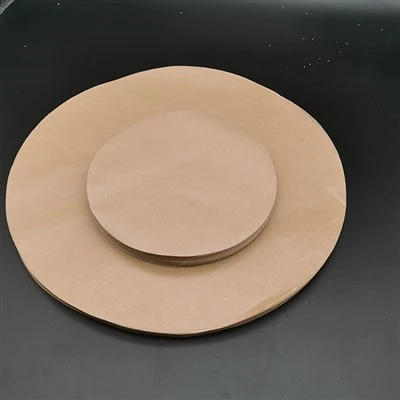
Many buyers only see finished baking‑paper rolls or sheets, yet product safety, heat resistance and non‑stick performance are determined in every production step. Below is our full factory workflow for food‑grade silicone‑coated parchment paper.
Step 1: Base Paper Incoming & Pre‑Treatment
We use food‑grade glassine base paper for baking parchment, not ordinary paper.
Incoming inspection: Verify paper GSM (38‑60gsm), tensile strength, heat resistance. Check for fluorescent agents, holes and impurities. Poor‑quality base paper will tear or yellow under high heat, even with good silicone coating.
Unwind & dust removal: Remove surface dust and debris. Dust causes pinholes and partial silicone flaking, one major source of silicone migration risk.
Optional primer treatment: For premium export‑grade orders, a thin primer seals paper pores, improves silicone adhesion and reduces silicone transfer risk.
Note for importers: Low‑cost suppliers sometimes use non‑food‑grade base stock, which fails food‑contact compliance for EU, US and Southeast‑Asia markets.

Step 2: Cooling & Master‑Roll Winding
Hot coated paper goes through a cooling section to stabilize the silicone layer. Finished material is wound into large master rolls (typical width:1300‑2200 mm). Inline camera inspection detects pinholes, streaks and missing coating. Samples are tested for release force and coating weight, with full batch records kept for export traceability. These large master rolls are semi‑finished products at this stage.

Step 3: Rewinding
Master rolls are rewound to adjust web tension, remove defective sections, and build rolls to target outer diameter and core size for retail rolls or large catering rolls. Tension control matters greatly. Excessive tension makes paper brittle; insufficient tension results in loose, misaligned rolls.
Step 4: Slitting & Sheeting
Two finished‑product formats:
Roll format: Slit wide master rolls down to customer‑requested widths (30 cm, 40 cm etc.) and wound onto paper cores.
Sheet format: Rotary sheeters cut parchment into flat single sheets for baking‑tray use, stacked neatly.
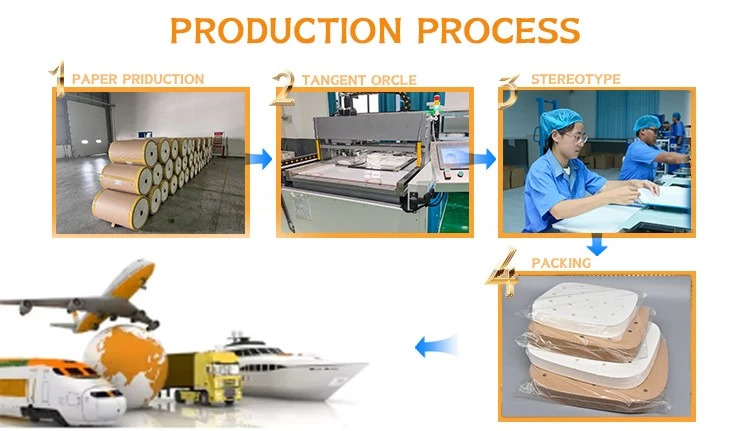
Step 5: Final QC & Laboratory Sampling
Before packing, production batches are sampled for full‑range checks:
Visual check: holes, dark spots, missing coating, edge curling.
Physical tests: tear strength, release performance, heat‑resistance evaluation.
Food‑safety tests: silicone migration test, heavy‑metal and fluorescent‑substance screening, mandatory for EU, USA and Southeast‑Asia imports.
Step 6: Moisture‑Proof Packing & Delivery
Silicone‑coated paper is sensitive to humidity. Each batch is sealed with moisture‑resistant inner film and packed in cartons. Cartons carry batch numbers, GSM, single‑/double‑sided marking, size specifications and compliance references for full traceability, ready for container loading.